Sustainability in Aviation: How Helicopter AI Promotes Green Maintenance Practices
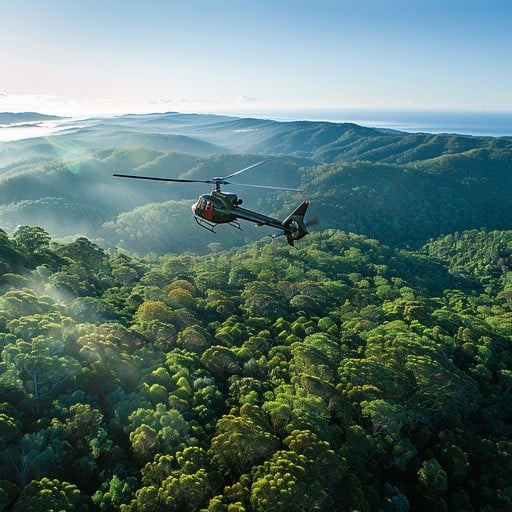
The aviation industry is under increasing pressure to reduce its environmental impact and adopt sustainable practices. Helicopter AI assistants are playing a crucial role in this transformation, enabling more efficient maintenance practices that reduce waste, optimize resource usage, and extend component lifecycles while maintaining the highest safety standards.
The Sustainability Challenge in Aviation
Aviation maintenance operations generate significant environmental impacts through fuel consumption, waste production, and resource utilization. Traditional maintenance approaches often prioritize safety and reliability over environmental considerations, leading to conservative practices that may not optimize resource usage.
The challenge lies in balancing environmental responsibility with the non-negotiable requirements of aviation safety. Helicopter AI assistants provide the intelligence needed to optimize this balance, identifying opportunities for sustainable practices without compromising safety or reliability.
Key Sustainability Challenges in Aviation Maintenance:
- • Component Waste: Premature replacement of serviceable components
- • Energy Consumption: High energy usage in maintenance facilities
- • Chemical Usage: Extensive use of cleaning solvents and maintenance chemicals
- • Transportation Impact: Movement of parts and personnel for maintenance
How Helicopter AI Enables Sustainable Maintenance
Helicopter AI assistants promote sustainability through more precise diagnostics that prevent unnecessary component replacements, optimized maintenance scheduling that reduces energy consumption, and intelligent resource management that minimizes waste throughout maintenance operations.
By providing accurate troubleshooting guidance, helicopter AI systems help technicians identify the exact cause of problems, preventing the wasteful practice of replacing multiple components to solve a single issue. This precision reduces both component waste and the environmental impact of manufacturing replacement parts.
Extending Component Lifecycles
One of the most significant sustainability benefits of helicopter AI assistants is their ability to extend component lifecycles through predictive maintenance and condition-based monitoring. These systems can identify when components can safely continue in service beyond traditional replacement intervals.
Sustainable Maintenance Strategies:
- • Condition-Based Maintenance: Replace components based on actual condition
- • Predictive Analytics: Optimize replacement timing to maximize component life
- • Repair vs. Replace: Identify opportunities for component repair instead of replacement
- • Resource Optimization: Minimize material and energy consumption
Reducing Maintenance-Related Travel
Helicopter AI assistants reduce the environmental impact of maintenance operations by minimizing the need for expert technicians to travel to remote locations. Remote troubleshooting support through AI systems can often resolve issues without requiring additional personnel or equipment transportation.
This capability is particularly valuable for helicopter operations in remote locations, where bringing in specialized expertise traditionally required significant transportation resources and associated environmental impact.
Optimizing Parts Inventory and Logistics
Helicopter AI systems contribute to sustainability by optimizing parts inventory management and reducing unnecessary parts orders. Accurate diagnostics prevent over-ordering of components, while predictive maintenance capabilities enable more efficient inventory planning.
- Reduced parts inventory through accurate demand forecasting
- Minimized emergency parts shipments through predictive maintenance
- Optimized parts pooling and sharing across fleet operations
- Reduced packaging waste through consolidated shipments
Energy Efficiency in Maintenance Operations
Helicopter AI assistants improve energy efficiency in maintenance operations by optimizing maintenance scheduling, reducing aircraft downtime, and minimizing the energy consumption associated with extended troubleshooting procedures.
Faster, more accurate maintenance procedures mean less time with aircraft in heated or air-conditioned hangars, reduced use of maintenance equipment, and lower overall energy consumption per maintenance event.
Measuring and Reporting Sustainability Impact
Advanced helicopter AI systems can track and report on sustainability metrics, providing organizations with detailed insights into their environmental impact and the effectiveness of their sustainability initiatives. This data enables continuous improvement in sustainable maintenance practices.
The future of sustainable aviation maintenance lies in intelligent systems that automatically optimize for both safety and environmental impact. Helicopter AI assistants are leading this transformation, proving that environmental responsibility and operational excellence can go hand in hand.
Ready to Make Your Maintenance Operations More Sustainable?
Discover how Aviaid's helicopter AI assistant can help you reduce environmental impact while maintaining operational excellence.